
Way 1: Manual Unlock
- Locate the small switch on the side of the SD card (usually on the top left as you’re looking at its front).
- Slide the switch upwards (closer to the edge of the SD card) to unlock it.
How to Identify a Fake Samsung Micro SD Memory Card
- Step 2: Check the SD Card Adaptor. …
- Step 3: Check the Hole Punch on the Packaging. …
- Step 4: Check the Samsung Micro SD Card Quality. …
- Step 5: Check You Model Code on the Back of the Packaging. …
- Step 6: Check the Made in Statement on the Back of the Packaging.
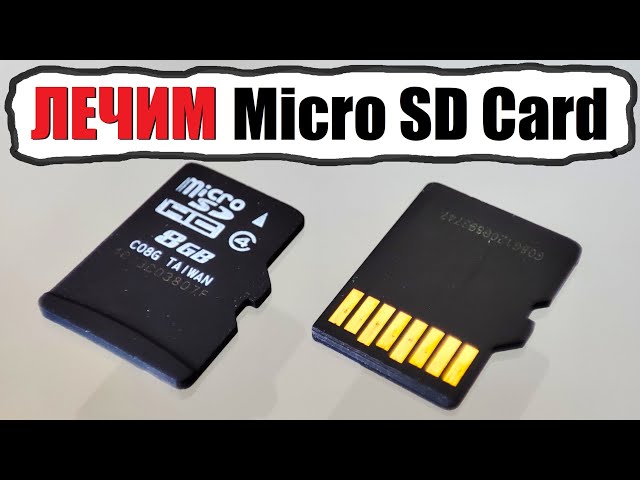
To fix a corrupted SD card, you can first check for a physical lock switch, try a different card reader or USB port, and then run the chkdsk command in Command Prompt (as an administrator) to check and repair the file system and bad sectors. If data recovery is needed, use data recovery software before attempting to format the card, which will erase all data. Before you start (Data Protection)
- Stop using the card immediately: To prevent overwriting any potentially recoverable data, stop writing to or deleting files from the card.
Step 1: Basic Checks
- Check the physical lock switch: Look for a small lock switch on the side of the SD card. If it’s in the locked position, slide it to the unlocked position and try the card again.
- Try a different reader/port: Connect the SD card to your computer using a different card reader or a different USB port, as the current connection or port might be faulty.
- Restart your device: Restarting your computer or the device the SD card was used in (like a camera) can sometimes resolve issues caused by corrupted temporary files.
Step 2: Using Windows Tools
- Check Disk Utility (chkdsk):
- Insert the SD card into your computer.
- Open Command Prompt as an administrator (search for “cmd” in the taskbar, right-click, and select “Run as administrator”).
- Type the command: chkdsk [sd_card_drive_letter]: /f /r /x.
- Replace [sd_card_drive_letter] with the actual drive letter assigned to your SD card (e.g., chkdsk E: /f /r /x).
- Press Enter and let the scan complete.
Step 3: Data Recovery (If Needed)
- Use recovery software: If data is missing or corrupted, use professional data recovery software like Disk Drill or Stellar Photo Recovery to scan the SD card and recover files.
Step 4: Formatting the Card (Last Resort)
- Format the card: If the above steps fail and you don’t need the data, formatting will erase the data and potentially fix the card.
- Connect the card to your computer.
- Right-click the SD card in File Explorer and select Format.
- Choose a file system (e.g., FAT32 or exFAT) and click Start.
- For best compatibility, you can also format the card within the device it’s used in, such as a camera.
An SD card lock switch works by a small slider on the card closing a contact in the card reader’s slot, signaling the host device to enter a read-only mode. The switch itself doesn’t electronically control the card’s internal memory. Instead, the device’s operating system, upon detecting the closed contact from the reader, prevents any writing or modifying of data on the card, ensuring files remain secure from deletion or accidental changes. How the Lock Switch Works
- Physical Actuation: The small plastic slider on the side of the SD card moves in a groove.
- Reader Sensor: When you insert the card into a compatible reader, a spring-loaded metal contact inside the reader’s slot senses the switch’s position.
- Contact Closure: In the “lock” position, the slider closes this contact.
- Signal to the Device: This closed contact signals the card reader, which then sends a “write-protected” status to the host computer or device.
- Read-Only Operation: The host device’s software, seeing the write-protected status, will not allow you to delete, modify, or add new files to the card.
- Unlocked Mode: When the switch is in the “unlock” position, the contact in the reader remains open, and the device allows read and write operations on the card.
What the Switch Doesn’t Do
- Internal Control: The switch does not directly interact with or control the internal flash memory of the SD card.
- Data Protection: It does not hide or secure individual files on the card; it only prevents new data from being written to the card as a whole.
Compatibility and Support
- Device Dependent: The functionality of the lock switch relies entirely on the card reader and host device.
- MicroSD Cards: Many microSD cards do not have a physical lock switch because they lack the necessary contact points, but they can still work with an adapter that provides the switch functionality.
- Voluntary Enforcement: The operating system or device can choose to ignore the “write-protected” signal from the reader.
Досить поширена ситуація – потрібно витягнути дані з несправного носія. Проблема, найчастіше, полягає у виході з ладу або збою в роботі контролера. У таких …
Перше, що слід з’ясувати під час вибору карти пам’яті — який тип карти пам’яті потрібен вашому пристрою. Цю інформацію можна знайти в інструкції з експлуатації …
Перейдіть в Google диск, клацніть Кошик. Відсортуйте вміст за датами. Знайдіть значок «три крапки» під файлом, який потрібно відновити.
Історія та кеш Google Chrome · Відкрийте Chrome – натисніть 3 крапки в правому кутку, щоб викликати меню керування – Історія – Очистити історію – Розширені – …